Showing posts with label Technology. Show all posts

Wednesday, May 16, 2007

Use eco-friendly paper


If you don't know the fact that mostly papers are made from woods, please learn it atleast now. Predominatly papers are made from woods. Papers made from wood are produced after cutting down huge amount of trees. Nowadays synthetic papers also being used. It is also possible to make paper from many waste products in the world like vegetable waste, fruits waste, grass etc. Though these technologies are invented very long years ago, they are not in practice because of the popularity of wood made papers. These technologies are picking up well after proper education amoung our people. Indian Govertment is doing a good job through KVIC (Khadi and Village Industries commission) by promoting handmade and recycled paper manufactures in small scale.

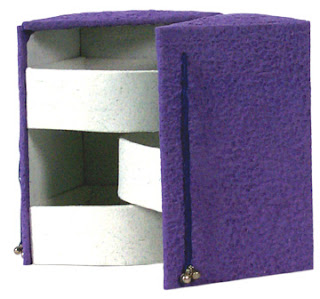
I met a KVIC beneficiary yesterday. His name is Sundar. He is a young chap left his Charted Accountant courses and career after learnt about handmade paper industry and its benefits to society. He has approached KVIC, got loan and subsidary on capital amount and started his own venture. He is doing excellent service (business) by giving employment to many rural workers. They are bringing up many innovations as products. I am surprised to see photo-frames, purse, pen-stand and many desktop items made out of handmade boards. The quality is very rich.

I am happy to hear State Bank of India has sent a circular to all branches to use eco-friendly paper ten days ago. You too use eco-friendly paper and save trees.

Tuesday, March 20, 2007

Microsoft's technology for emerging markets

The Technology for Emerging Markets group at Microsoft Research India seeks to address the needs and aspirations of people in emerging-market countries, including those who are increasingly consuming computing technologies and services, as well as those for whom access to computing technologies remains largely out of reach.

The research in this group consists of both technical and social-science research. They work in the areas of ethnography, sociology, political science, and economics, all of which help understand the social context of technology, and they also do technical research in hardware and software to devise solutions that are designed for emerging and underserved markets, both in rural and urban environments.

More details shall be found at http://research.microsoft.com/research/tem/default.aspx

Sunday, January 28, 2007

Bio Diesel

I was amazed when I first heard that diesel can be produced from plant seeds. Somehow my maturity level has increased after monitoring bio-diesel experiments. But still many people are not aware about bio-diesel preparation and its other benefits to the society.

Bio-diesel is an oil extracted from plant seeds to run diesel engines. It can entirely or with mixture with diesel work as a fuel. As per 2002 statistics, India imported around 90000 crores worth petroleum products. If India can produce bio-diesel for its sufficiency, It can approximately save 7000 crores annually.

Though bio-diesel can be extracted by various means (like soyabeans / sunflower), Jatropha seeds play a significant role in biodiesel preparation. Jatropha plantation and maintanence are very simple. The major advantage of Jatropha is, it can be planted in dry lands or wastelands where water availability is very less. Once in fifteen days watering is enough for these plants to grow. It doesn't maintanence after two years of plantation. India has vast amount of waste lands not fit for afforestation. These lands shall be used for Jatropha cultivation. Jatropha seeds give 60% glycerol as byproduct during its oil extraction. Glycerol is essential for soap manufacturing.

It has been experimented in India for last two to three years and industries are geared up towards bio-diesel engines to make it available to layman soon. All train engines of Indian railways are using bio-diesel as its fuel!

Saturday, July 22, 2006

Oppurtunities to work rurally and compete globally

Urban population is increasing day to day as people are migrating towards urban seeking for better oppurtunities. People from urban are even moving towards metros. Bangalore and Chennai are getting congested like anything as people from whole India are migrating towards it. In one way, people can enjoy this scenario as they get oppurtunity to see faces of their fellow contrymen from different states. It is really nice at country like India where people from different states come with different languagues, different life-styles, different tastes etc... but still they will join hands to work for some common causes.

In other side, It is really painful to see that why people are migrating towards metropolitan by leaving their families and favourite memories at their natives. In my experience, I have seen migrants to be enjoyed for some initial days at metros, but sooner they get bored and like to go back to their native. This applies to people who have migrated to abroad also. But, they are not able to go back to their native because of changed lifestyle and their needed money is available only at metros.

We may think that people who migrate from rural to urban to get richer life are selfish. They don't thought to improve the class of rural by working there and pulling people there. They haven't taken a fair decision to live with whatever available in rural. Though these sentiments may seem good to think, it is not at all possible for "majority" of people to live with these thoughts. I feel that it is not advisable to keep our young talented world-class people to work on local tasks alone selfishly. This is age for them to take calculated risks and try out new experiments. They want more challenges in life that are available in abundance in our metropolitans. Also we are living in global era where migration of rural to urban / urban to metros becomes inevitable.

The solution for this problem shall be improvement of rural infrastructure to world class. It should help our talented young world-class people to work globally by sitting rurally. They should be able to start new ventures and compete globally. While reading this post, if you feel that this is a well-known problem with well-known un-realistic solution, you are wrong. Let me walk you through one of the sucess story to understand how to work rurally and compete globally.

Mr.Nagarajan from usillamptti (a small town near Madurai) has come up with a grassroot innovation called garlic peeler to peel-out dry garlic skins. This device as you see in the below picture peel-out garlic skins within minutes.


NIF(National Innovation Foundation) has recognized Nagarajan's Innovation. NIF helped to protect this innovation by IP (Intellectual Property) rights and helping him to market globally. When chatting with him, he mentioned that he devised this to ease garlic pickle preparation but companies are finding many applications out of this device. He has sold this device to many great Indian companies. He casually said that he has approached all major Indian players and aggresively targetting global markets. He also proudly mentioned his device will peel-out skins of all types of garlics compared to similar foreign devices that would peel-out their local garlic species only. He has internet in his office room and check mails. Wow! This is good successful model to work rurally and compete globally.

Tuesday, July 11, 2006

We are working for other's problems without solving ours...


Last month, I took a workshop on "Technology Innovation" for a group of around 50 pre final engineering colleage students from TamilNadu. It was very nice discussion with these bright young chaps. They had lot interesting questions and thoughts.

One girl asked why India has not produced (branded on India's name) any major innovations (jazzy innovations like iPod, blackberry etc)? She may know the answer that Indian's are doing their best by working in foreign countries and branding their innovations on foreign company names. Still, she thought aloud to make her point clear and to others also to think. Parking this question for a while, I diverted the topic by asking for their interesting aspirations after their college studies. As usual, all hands raised for joining a software company (some were particular to join MNC). I searched but did not fount atleast one entereprenur aspirant in that crowd. That's all. I have answered to her question...

One guy asked me about job requirements in IT industry after some twenty years. I parked this question for two hours and updated them about success stories of Innovation, IP rights and its ROI (Return on Investment) etc and asked whether the question is still valid?! I think I have confused him ;-) he thought for a while and still he felt the same. He felt that if everything is automated and robots have come, where will humans would get oppurtunity to work. Some people think Robots as saturation point. What is after Robot?! No answer... Ok if not Robot also, We have long way to go. We are working on problems that are tip of iceberg. We are ultimately working for others (other foreign countries) problems. We have just started to start work on our problems. So the oppurtunities are infinite! You can find oppurtunity based on your thoughts. Big thoughts --> Big oppurtunities...


I insisted them to take some mini project or final year project that would benifit rural people. They can apply their talents and skills to our people first during their colleage studies and then go to solve foreigner's problems. I saw some twinkle in their eyes. I was happy that I made my message clear.

Wednesday, July 05, 2006

Grassroot Innovation from and for weavers

We admire innovations like iPod, TV on mobile etc for our entertainment. It is doubtful, even one person might have heard about iPod in the village that I visited last week. Still, there is innovation in that village. This is more to do for their livelihood.

I have got an oppurtunity to visit T-Ramanathpuram, village near usilampatti to check the progress of a grassroot Innovation. I went along with a NIF (National Innovation Foundation) Coordinator. It was nice meeting with him and learnt many activities of NIF on my travel.

T-Ramanathpuram is peculiar village where half of the population speaks Telugu and other half speaks Kannada besides Tamil. Weaving is the main livelihood option for this villagers. They are registered to some silk societies in Madurai/Kumbakonam/other cities. Society people would give specifications for sarees to weave based on customers taste and feedback through some agents. The agents being mediators between the society and weavers provide specifications, threads for manufacturing etc. Weavers do their job perfectly and return back the finished goods to agents and collect their labour cost. They are paid around 200 bucks per saree. It will take three days to weave a saree after the base thread (thari) setup. If it is a double border saree, two person would be needed for three days and they both has to share the 200 bucks. The second person's job is less, he would arrange the thread continuously for the border to come properly, but still his presence is needed. The second person job is called in tamil Kommai poodaradhu. Because of the need of this second person, many parents of ourprevious generation haven't sent their kids to school. They have involved them also for these tasks. Many people in this village are illiterates.


We visited a small house where a innovation for double saree weaving is installed on trial basis. There is a mechanical setup called Juccard as you see in the below figure. This is the innovation and this eliminates the need for second person. It automatically takes care of border design. Hence it improves the productivity. 6 man days effort is reduced to 2 man days effort. Wow! What an innovation for these villagers! They can now earn that 200 bucks very earlier. They can even have mulitple thari setups and earn multiple times more than current setup!


When we are interviewing the villager who uses this Juccard setup, he feels thankful to this innovation and felt that their village might have flourished well and many might have graduated if this innovation had come up some 20 years back. Better late not never, Atleast now this innovation has nurtured to this level with the help of NGOs like Honeybee, SEVA and Autonomous bodies like NIF. India shines babe!

Unfortunately, I was not able to meet the innovator. The person in photo is the user of this innovation. The innovator is from diferent part of Tamil Nadu. He came to this village, installed and trained this person.

Await to get updated on NIF and Honeybee network...